
Danish castles to visit: Kronborg, Rosenborg, Frederiksborg and Egeskov
Denmark's castles are mostly Renaissance buildings raised by its kings in the 16th and 17th centuries. Kronborg at Helsingør, the Elsinore of Hamlet, is a UNESCO World Heritage Site, Rosenborg in Copenhagen keeps the crown jewels and the Danish regalia, and Frederiksborg in Hillerød was built for Christian IV as the largest Renaissance residence in Scandinavia. On Funen, Egeskov, built in 1554 on oak piles in a lake, is the best-preserved Renaissance water castle in the country.
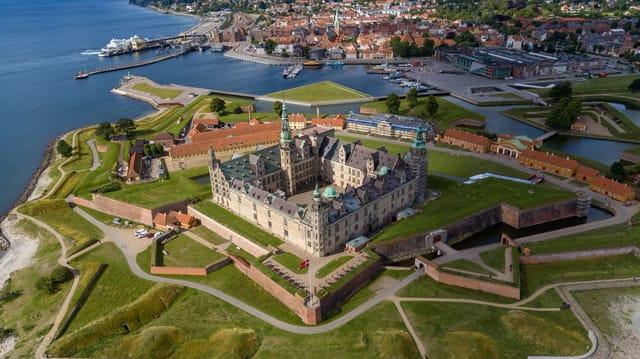 Kronborg The Renaissance castle at Helsingør on the narrowest point of the Øresund, the Elsinore of Shakespeare's Hamlet.
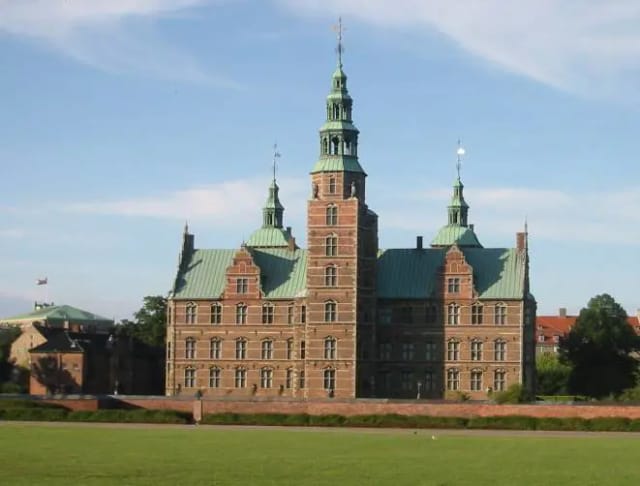 Rosenborg Castle Christian IV's Renaissance castle in the King's Garden in Copenhagen, where the Danish crown jewels and regalia are kept.
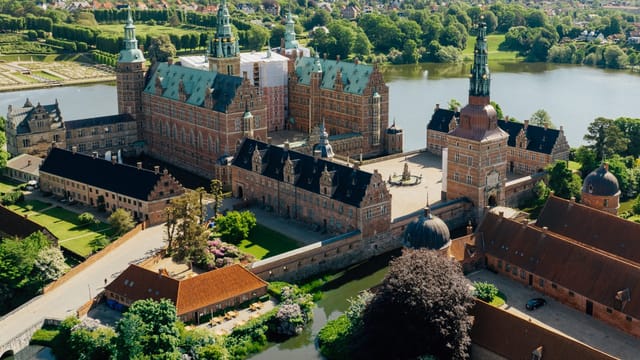 Frederiksborg Castle Christian IV's Renaissance palace on three islets in the castle lake at Hillerød, home of the Museum of National History.
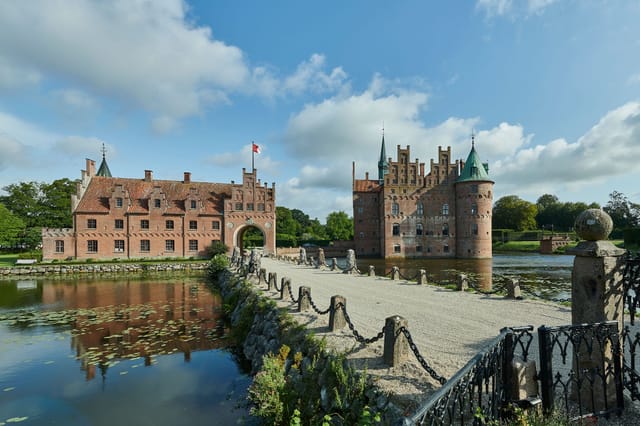 Egeskov A Renaissance water castle on oak piles in a lake in southern Funen, with gardens, mazes and museums of cars and machines.
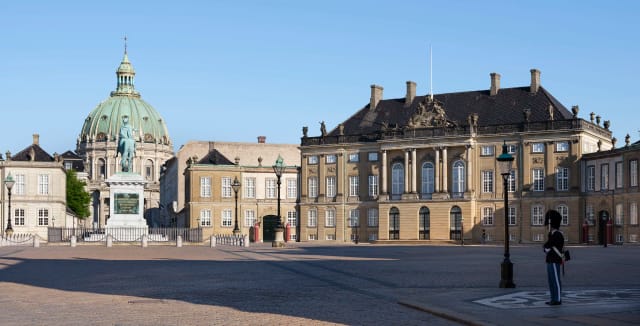 Amalienborg The four Rococo palaces around an octagonal square in Copenhagen that are the home of the Danish royal family, with a museum in one of them.
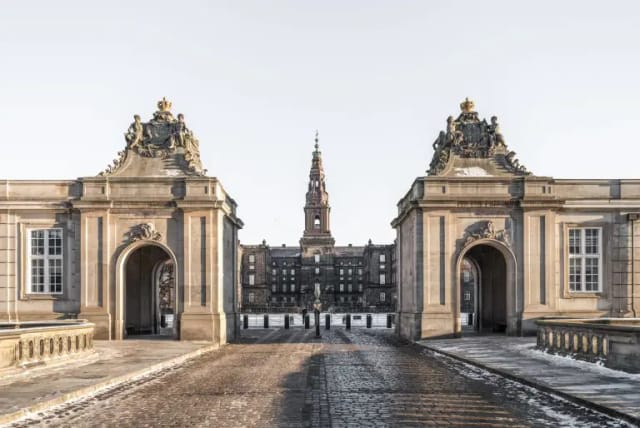 Christiansborg Palace The palace on Slotsholmen in Copenhagen that holds the Danish parliament, the Prime Minister's Office and the Supreme Court, with the King's reception rooms.
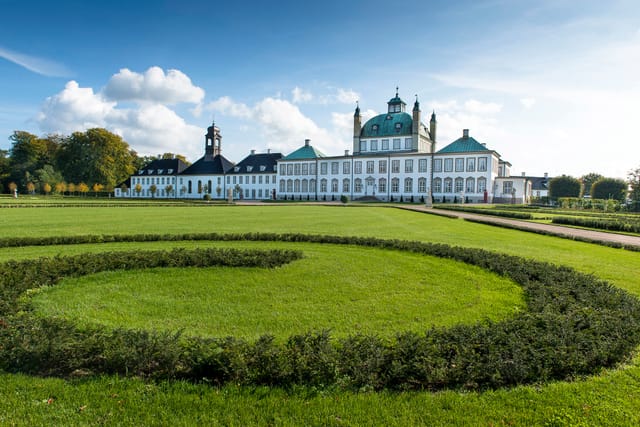 Fredensborg Palace The Danish royal family's Baroque palace on Lake Esrum in North Zealand, their spring and autumn residence, with one of Denmark's largest Baroque gardens.
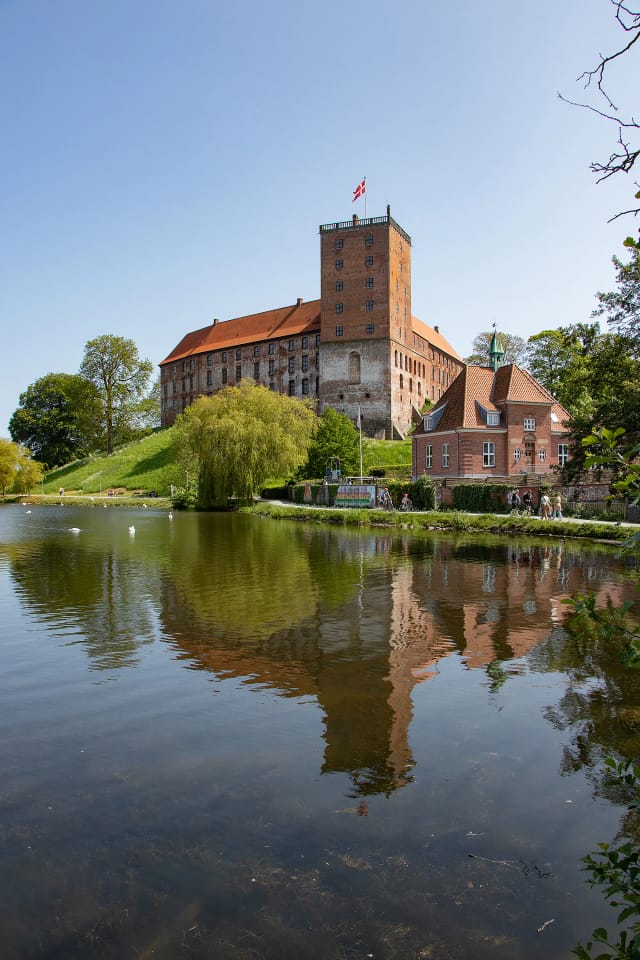 Koldinghus The royal castle above the lake in Kolding, a medieval fortress and Renaissance residence that burned in 1808 and now houses a museum run by the Royal Danish Collection.
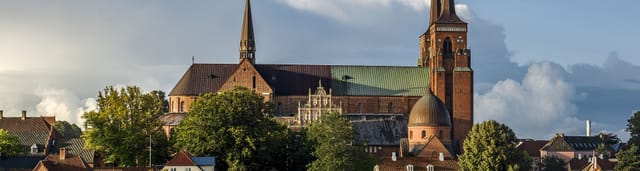 Roskilde Cathedral The brick Gothic cathedral in Roskilde where Danish kings and queens have been buried since the 15th century, on the UNESCO World Heritage List since 1995.
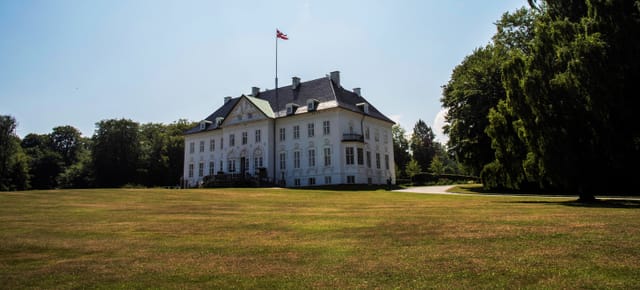 Marselisborg Palace The Danish royal family's summer residence in Aarhus, built 1899–1902 by Hack Kampmann, whose 13-hectare park opens to the public when the family is away.
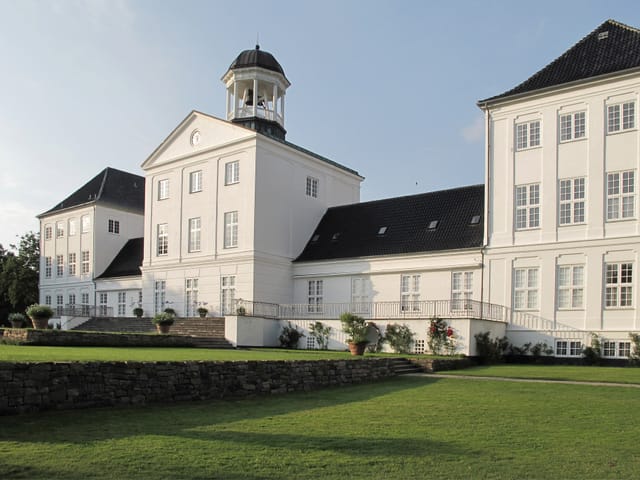 Graasten Palace The Danish royal family's white summer palace at Gråsten in South Jutland, with a Baroque palace church, a romantic landscape garden and a royal kitchen garden.
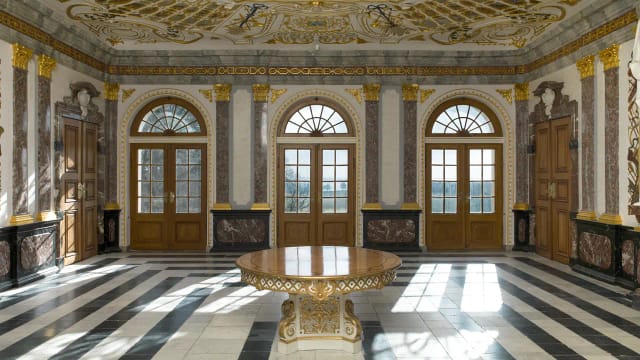 The Hermitage Palace The Baroque royal hunting lodge on the Hermitage Plain in Jægersborg Dyrehave, built 1734 to 1736 for Christian VI and shown by the Royal Danish Collection.