
Fredensborg Palace
The Danish royal family's Baroque palace on Lake Esrum in North Zealand, their spring and autumn residence, with one of Denmark's largest Baroque gardens.
- Founded
- 1722
- Founded by
- King Frederik IV
- Address
- Fredensborg
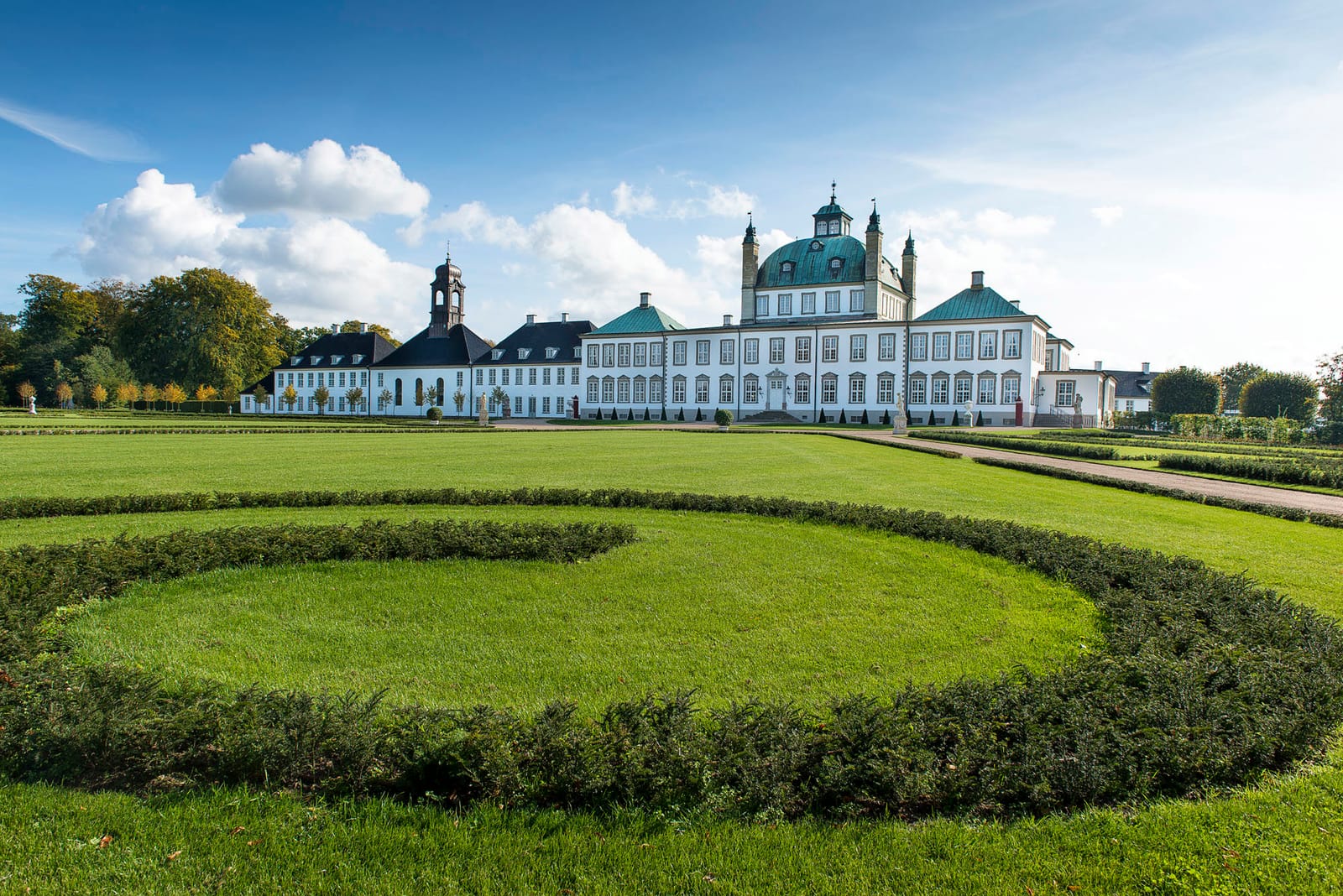
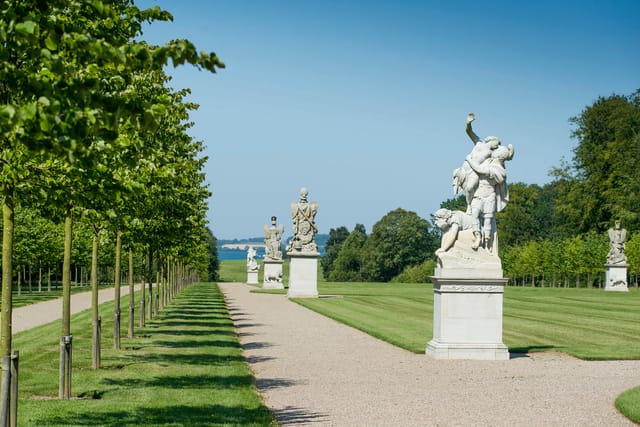
Pictures © Fredensborg Palace, from kongehuset.dk.
Why it is renowned
In the 19th century Christian IX and Queen Louise, known as Europe's parents-in-law, gathered their children and their spouses from many of Europe's royal houses here every summer.1 It is the royal family's most used residence and the setting for state visits, weddings and birthdays.21 In 2021 the restoration of its palace garden received the European Heritage Award / Europa Nostra Award.1
The story
Frederik IV had the architect J.C. Krieger build the palace as a country seat; work began in 1719, the main building was first used in 1722 and the chapel in 1726.1 The peace that ended Denmark's part in the Great Northern War was signed on the site in 1720, and the palace was named for it.2 Lauritz de Thurah, Nicolai Eigtved and C.F. Harsdorff rebuilt and enlarged it under Christian VI and Frederik V.1 Krieger laid out the garden of nearly 120 hectares with avenues fanning out from the palace; Nicolas-Henri Jardin rearranged it in the 1760s with sculptures by Johannes Wiedewelt.1 Brede Allé and the parterre were restored from 2009 and reopened in 2013.1
What to know it by
- The Dome HallThe central hall of the main palace
- Brede AlléJ.C. KriegerThe garden's main axis, restored 2009–2013
- Valley of the NorsemenJ.G. Grund68 sandstone figures of Norwegian and Faroese farmers and fishermen
- Chancellery House1731J.C. KriegerResidence of the royal family
Sources
- Fredensborg Palace, The Danish Royal House. kongehuset.dk, read 28 September 2026.
- Fredensborg Palace, Wikipedia. en.wikipedia.org, read 28 September 2026.
Last checked 28 September 2026, against the maker's own pages.