
Royal Copenhagen
The porcelain factory founded in Copenhagen in 1775, known for its hand-painted Blue Fluted and Flora Danica services.
- Founded
- 1775
- Founded by
- Frantz Heinrich Müller
- Based in
- Copenhagen
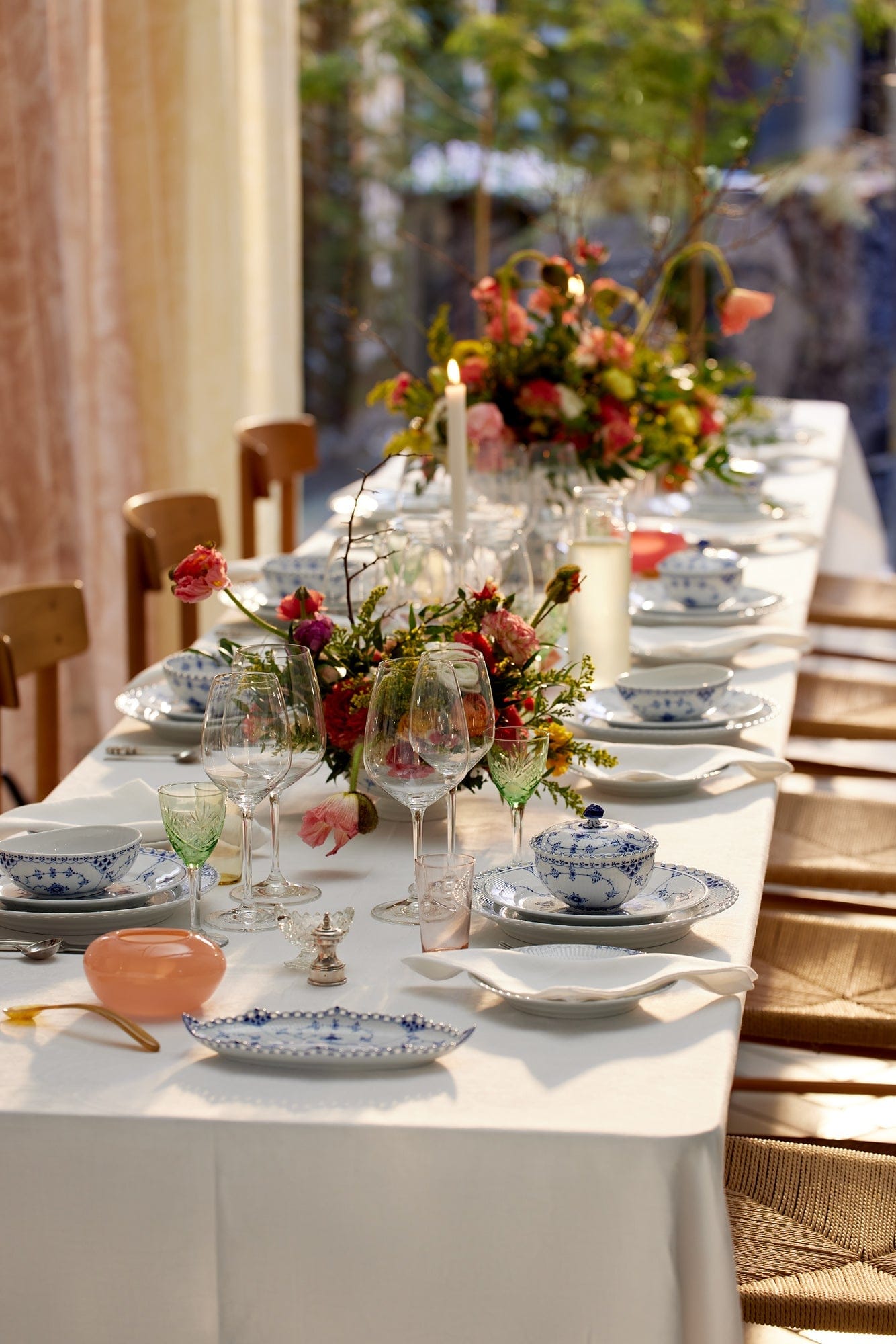
Pictures © Royal Copenhagen, from royalcopenhagen.com.
Why it is renowned
Royal Copenhagen showed its porcelain at the Great Exhibition in London in 1851 and won the Grand Prix at the Exposition Universelle in Paris in 1889.1 Its Flora Danica service began in 1790 as a commission from King Christian VII, meant as a gift for Catherine the Great, and is still painted by hand.1 Blue Fluted, its pattern No. 1, has been made since the factory opened, and its Christmas plates have appeared every year since 1908.12 The Victoria and Albert Museum in London keeps its porcelain and shows a plate of 1780–85, painted with flowers in enamels and gold, in its ceramics galleries.3
The story
The chemist Frantz Heinrich Müller founded the factory in a former post office in Copenhagen in 1775, under the protection of Dowager Queen Juliane Marie; when King Christian VII took over its finances in 1779 it became the Royal Porcelain Factory.1 The architect Arnold Krog, artistic director from 1884, made Blue Fluted Full Lace a whole dinner service and added the simpler Half Lace.12 The three wavy lines of its mark stand for the Danish waters Storebælt, Lillebælt and Øresund.1 Its flagship shop has stood at Amagertorv 6, in a building from 1616, since 1911.2 Most of its porcelain is now made in Thailand, while Flora Danica is still designed and painted in Denmark, where the design centre sits.1
Works
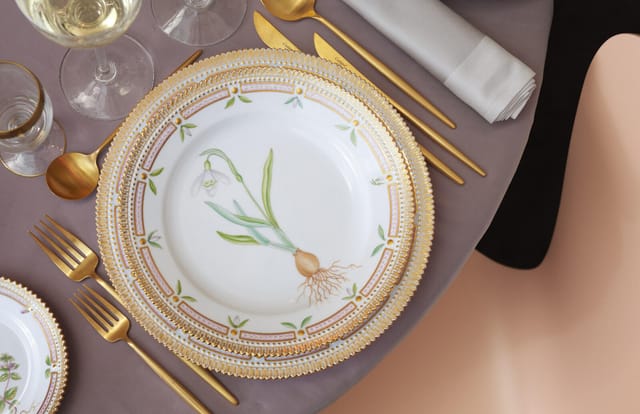 Flora Danica Royal Copenhagen's porcelain service painted by hand with the plants of the eighteenth-century botanical work Flora Danica, first ordered by the Danish court in 1790.
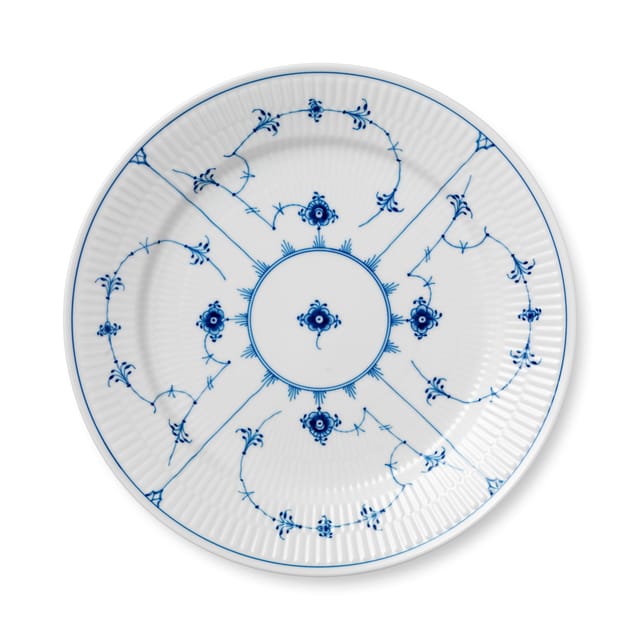 Blue Fluted Plain Royal Copenhagen's first pattern, from 1775: fluted white porcelain painted by hand in cobalt blue, known as Pattern No. 1 and in Danish as Musselmalet.
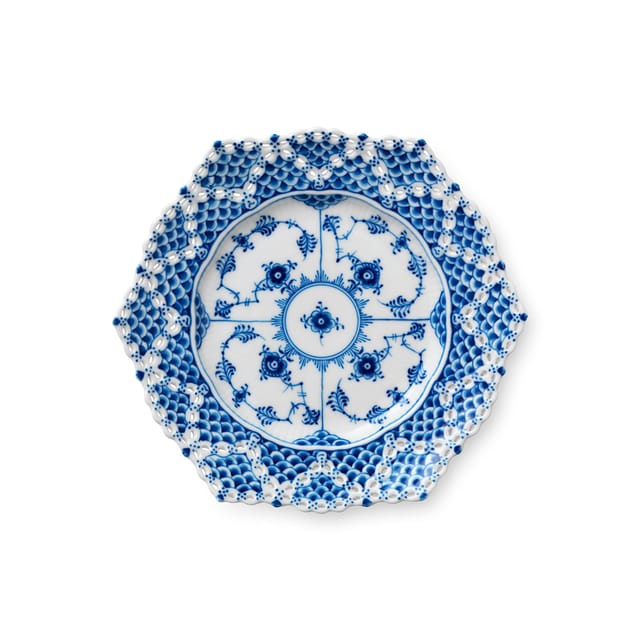 Blue Fluted Full Lace The Blue Fluted pattern with a lace border pierced by hand, first made in 1775 and revised in 1885 by Arnold Krog, who made it a full dinner service.
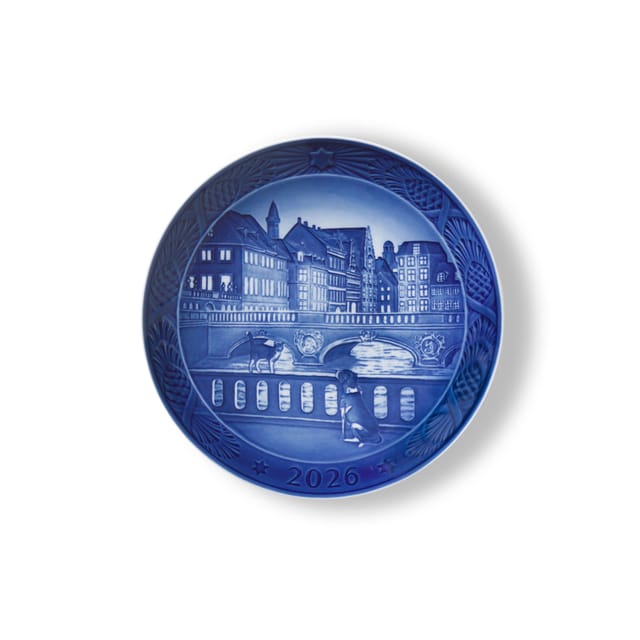 Christmas plates Blue and white porcelain plates with a new Christmas motif each year, issued by Royal Copenhagen since 1908.
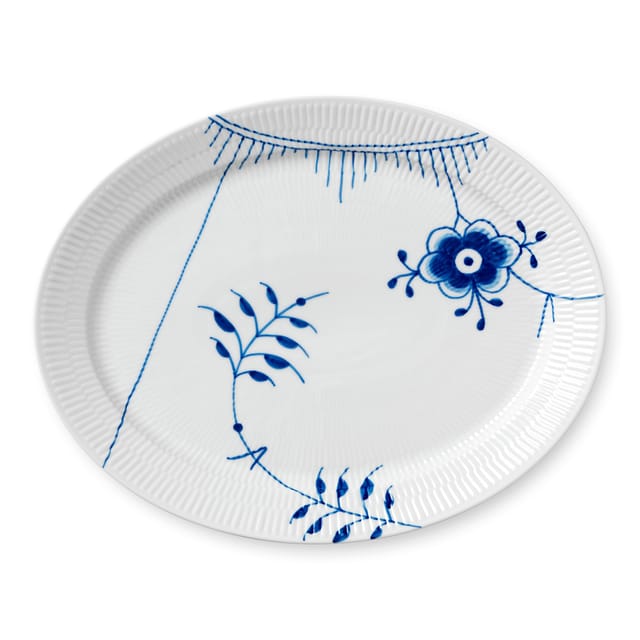 Blue Fluted Mega Karen Kjældgård-Larsen's reworking of Blue Fluted Plain from 2000, in which details of the old pattern are painted by hand at a much larger scale.
What to know it by
- Blue Fluted Plain21775Pattern No. 1, painted in cobalt blue
- Flora Danica11790Botanical service with gilded edges
- Blue Fluted Full Lace11885Blue Fluted with a lace border
- Blue Fluted Mega22000Karen Kjælgaard LarsenBlue Fluted with enlarged details
- Christmas plates11908A new plate every year
Sources
- Royal Copenhagen, Wikipedia. en.wikipedia.org, read 28 September 2026.
- Our History, Royal Copenhagen. royalcopenhagen.com, read 28 September 2026.
- Plate, Royal Copenhagen, V&A Explore The Collections. collections.vam.ac.uk, read 1 October 2026.
Checked 1 October 2026, against the maker's own pages.