
Design Tableware Royal Copenhagen
Flora Danica
Royal Copenhagen's porcelain service painted by hand with the plants of the eighteenth-century botanical work Flora Danica, first ordered by the Danish court in 1790.
- Made by
- Royal Copenhagen
- First made
- 1790
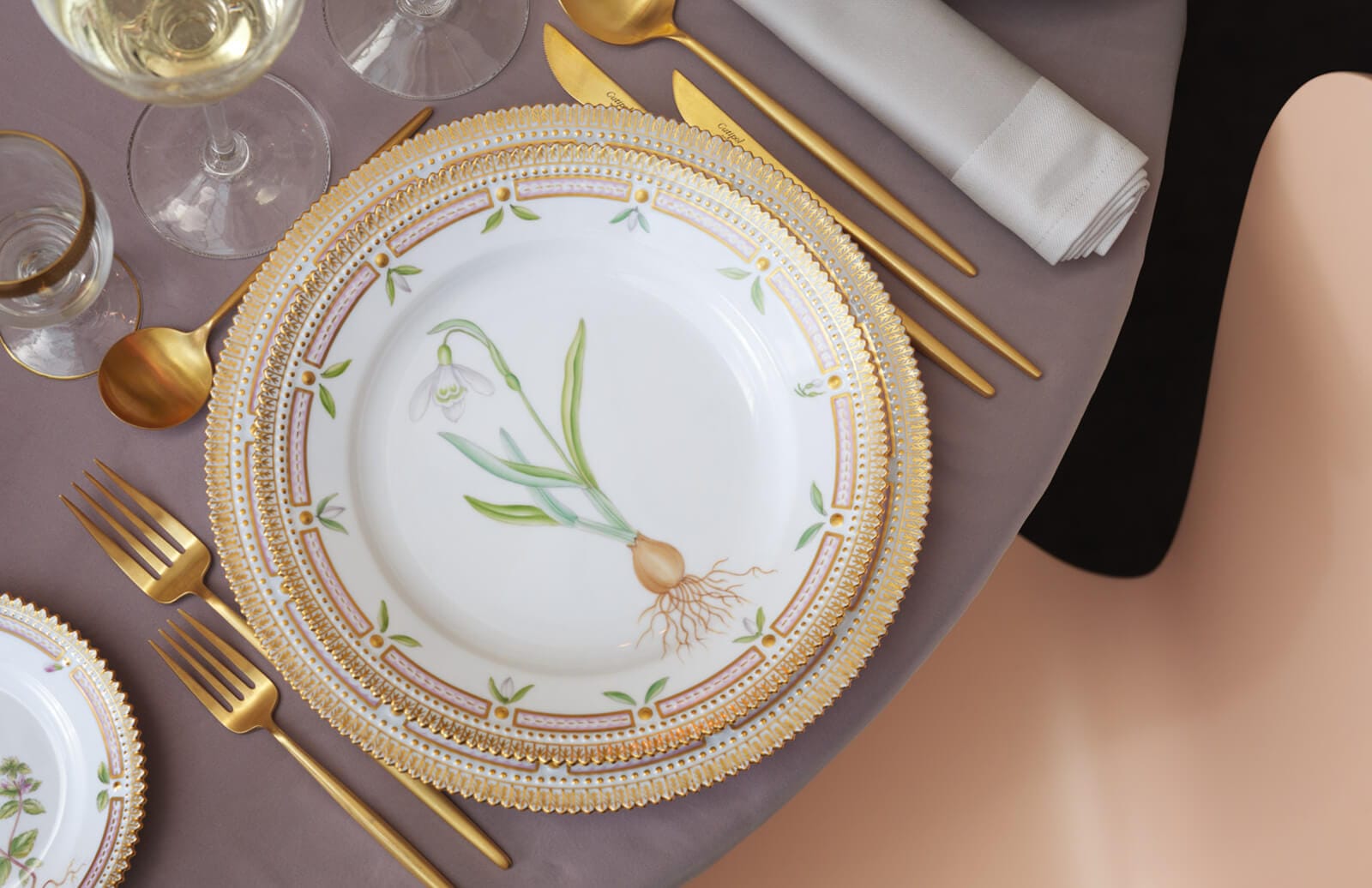
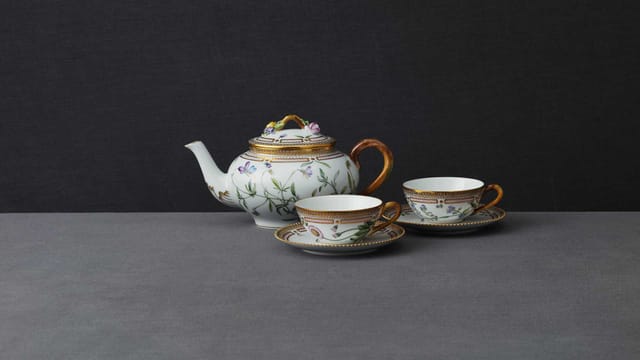
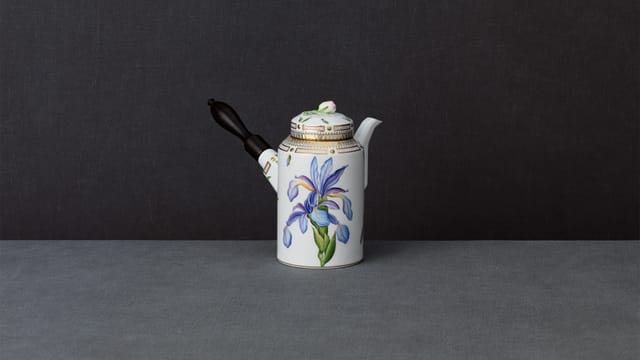
Pictures © Royal Copenhagen, from floradanica.royalcopenhagen.com.
Why it is renowned
In 1862, when Princess Alexandra of Denmark became engaged to the future King Edward VII, a committee of Danish women chose a Flora Danica service as the country's wedding gift; it reached London in February 1864, 725 pieces for 60 place settings, and most of it is still in the British Royal Collection.1 The King and Queen of Denmark added twelve dessert plates as a wedding gift to Princess Elizabeth and Prince Philip in 1947.1 Another service for 60 went to Athens in 1964, when Princess Anne-Marie of Denmark married King Constantine II of Greece.12
The story
In 1790 Crown Prince Frederik, regent for his father Christian VII, ordered a dessert service from the Royal Porcelain Factory, probably as a diplomatic gift for Catherine the Great of Russia; she died in 1796, before it was finished.13 Each piece copies a plant from Flora Danica, the botanical atlas begun in 1761, roots included, with the Latin name and the atlas reference written on the back.1 The painter Johann Christoph Bayer made most of the 1,802 pieces over twelve years, until the Crown Prince stopped production on 7 July 1802.2 1,530 of them remain in the Danish royal collection, shown at Rosenborg Castle, Christiansborg Palace and Amalienborg.12 Royal Copenhagen still makes the service by hand, each flower painted after the same copper prints, with about 3,000 motifs to choose from.2
Sources
- A dinner and dessert service, known as the Flora Danica service, Royal Collection Trust. rct.uk, read 29 September 2026.
- The story of Flora Danica, Royal Copenhagen. floradanica.royalcopenhagen.com, read 29 September 2026.
- Flora Danica, Wikipedia. en.wikipedia.org, read 29 September 2026.
Last checked 5 October 2026, against the maker's own pages.