
Havarti
Havarti, the semi-soft, washed-curd Danish cow's milk cheese, sold around the world and protected in the EU since 2019.
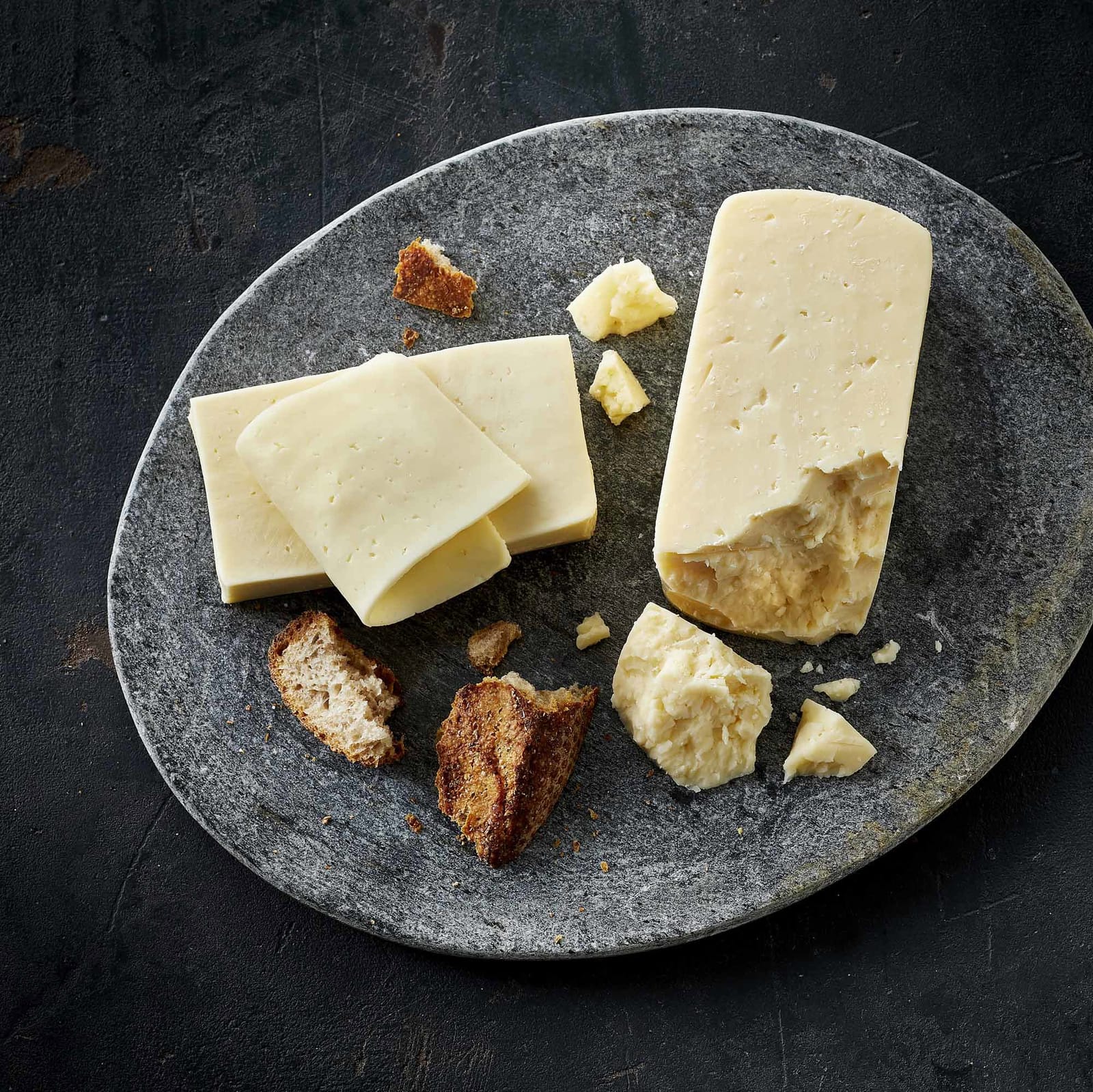
Pictures © Havarti, from castellocheese.com.
Why it is renowned
Havarti is made and eaten far beyond Denmark: Wisconsin and Canada produce it in quantity, and it is one of twelve cheeses whose standard is registered in the Codex Alimentarius.1 Denmark makes about 17,000 tonnes a year, and only 3,000 to 4,000 tonnes of that are eaten at home.1 In October 2019 the EU registered Havarti as a protected geographical indication after four years of Danish lobbying, over strong opposition from the United States; within the EU the name now belongs to cheese made from Danish milk at approved dairies.1
The story
The cheese is named after Havartigården near Holte, north of Copenhagen, where the cheesemaker Hanne Nielsen worked in the 19th century; among her cheeses was a caraway Tilsit made for King Christian IX.1 Danish production of the type, then called Danish Tilsiter, began in 1921, and it took the name Havarti in 1952.1 Pasteurised milk is set with cultures, and the curd is drained, moulded, pressed and brined.2 It is rindless, with small irregular holes, and usually ages for about three months; aged longer, up to a year, it turns firmer and forms small crystals.12 Castello, one of the Danish dairies that make it, sells it plain, aged and flavoured with dill, jalapeño or herbs.2
What to know it by
- Havarti PGI2019EU protected name: made from Danish milk at approved dairies
- FlødehavartiCream Havarti, made from flash-pasteurised milk and ripened little
- Castello Aged HavartiCastello's aged Havarti, with a crunch of small crystals
Sources
- Havarti, Wikipedia. en.wikipedia.org, read 28 September 2026.
- Havarti (PGI), Castello. castellocheese.com, read 28 September 2026.
Last checked 28 September 2026, against the maker's own pages.