
Design Tableware Lyngby Porcelæn
Lyngby vase
A white porcelain vase shaped as a fluted cylinder, first made by Lyngby Porcelæn in the 1930s and made again since the name returned.
- Made by
- Lyngby Porcelæn
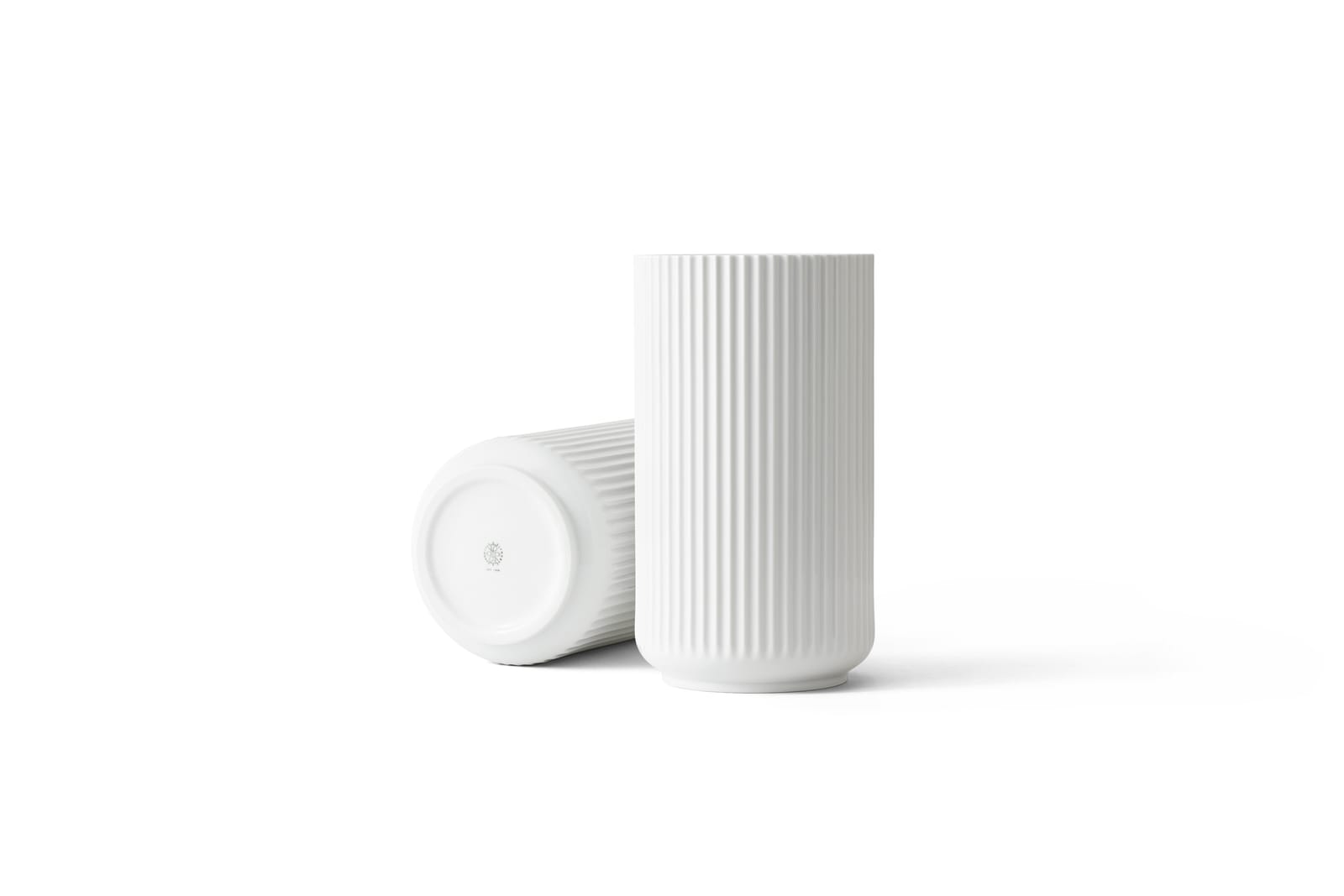
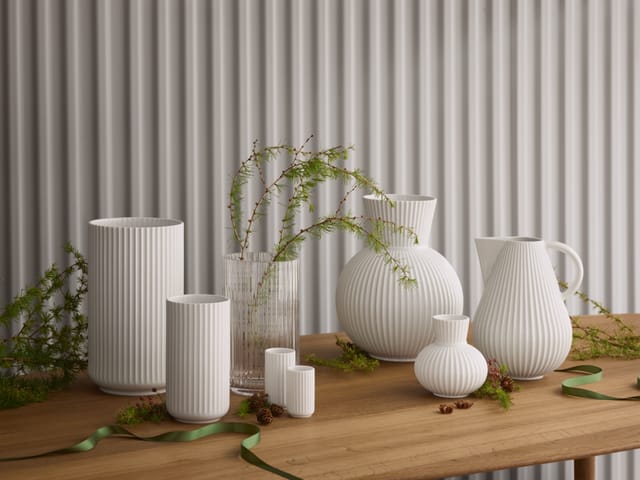
Pictures © Lyngby Porcelæn, from rosendahl.com.
Why it is renowned
The fluted vase is the piece Lyngby Porcelæn is remembered for, and Danish Wikipedia counts it a classic of Danish design.1 It was drawn in the 1930s after the Bauhaus idea of joining function and form.1 Most vases of the time carried painted ornament; this one had only grooves, closer to a classical column, and it drew notice for that.2
The story
The vase was first made in the 1930s.2 In 2012 it was relaunched by Hilfling Design, and from 2013 Karakter also made it; a settlement let both go on, since no one could show who first owned the design.1
The moulds are made at the factory. Each is turned on a lathe and its grooves are cut by hand; it is made 17 percent larger than the vase, which shrinks in the kiln, and can be used about 50 times before the edges soften.3 The vase is fired for 10 hours at 930 degrees, glazed, and fired again for 12 hours at 1,390 degrees, when it shrinks by 13 to 14 percent.3 A green monogram is printed by hand on every base.3 It is made today in several heights, and also in glass.2
Sources
- Porcelænsfabriken Danmark, Danish Wikipedia. da.wikipedia.org, read 1 October 2026.
- Lyngby Porcelæn - Lyngby. rosendahl.com, read 1 October 2026.
- Lyngby Porcelæn - production of the Lyngby vase. rosendahl.com, read 1 October 2026.
Last checked 1 October 2026, against the maker's own pages.