
Design Design objects Kay Bojesen
Monkey
Kay Bojesen's jointed wooden monkey of 1951, in teak and limba, made today by Rosendahl.
- Designed by
- Kay Bojesen
- Made by
- Kay Bojesen
- First made
- 1951
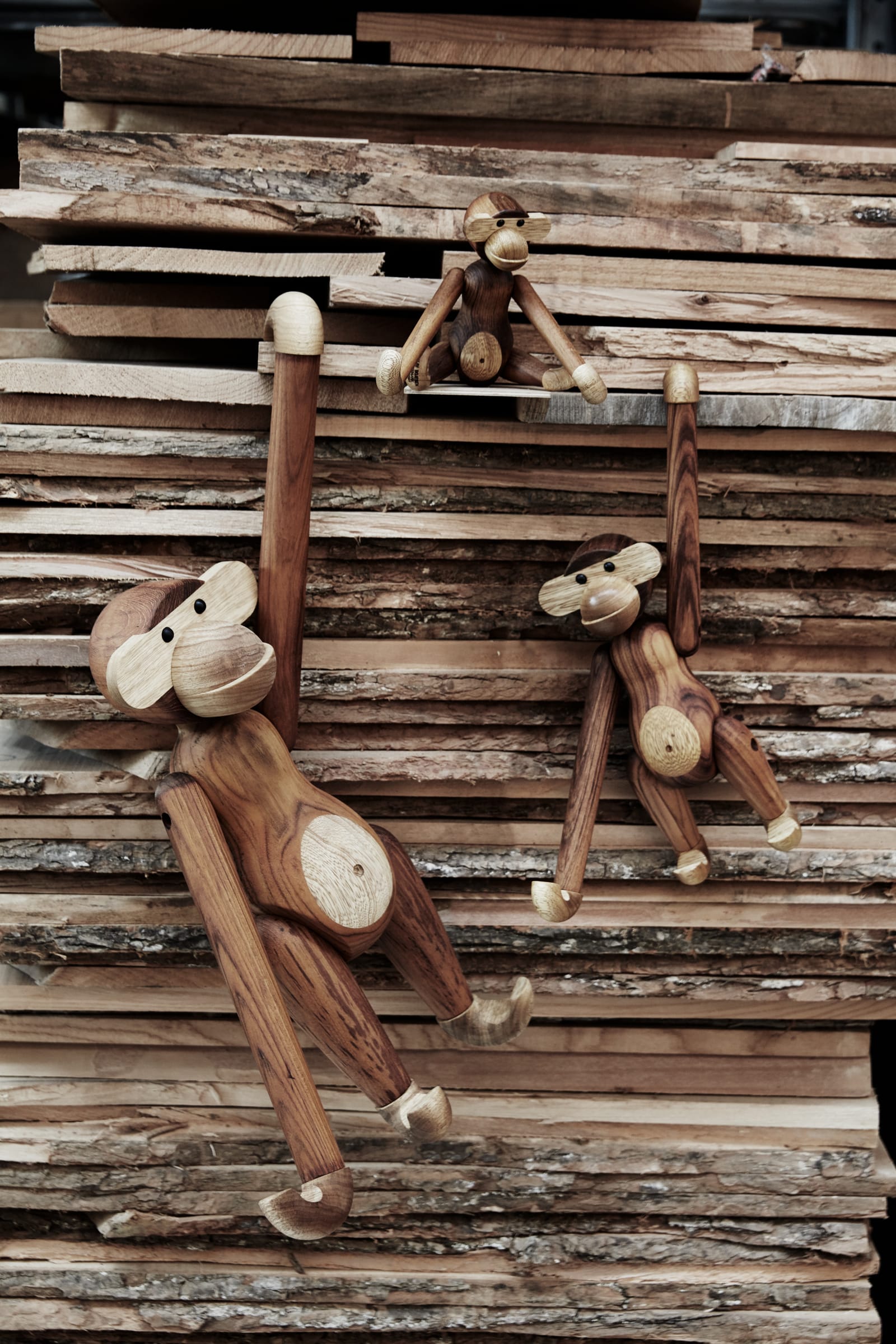
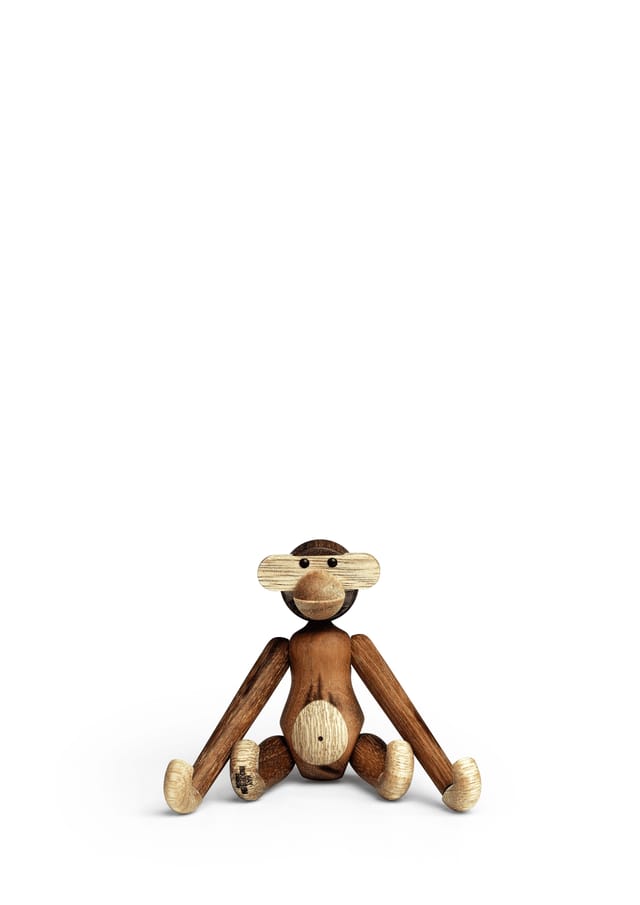
Pictures © Kay Bojesen, from rosendahl.com.
Why it is renowned
The Victoria and Albert Museum in London holds a Monkey in teak and limba, made by Rosendahl in 1995 and acquired in 1996; its record calls the design of 1951 a classic piece of Danish design.1 Rosendahl makes it today in three sizes, mini, small and large.2
The story
Kay Bojesen designed the Monkey in 1951 as a coat rack for a children's furniture exhibition: the long arms bring the hook down to a child's height, and the short legs leave room for a hat and scarf.3 Its lines were meant to smile, as Bojesen held all good design should.3 It is made of plantation teak and limba wood imported from Africa; the teak mellows to a warm golden brown with light and air.31 Each Monkey is still made by hand at a Danish wood-turning mill, as it was in 1951, and stamped KAY BOJESEN DENMARK under a foot.31
Sources
- Monkey, Victoria and Albert Museum. api.vam.ac.uk, read 29 September 2026.
- Kay Bojesen Monkeys, Rosendahl. rosendahl.com, read 29 September 2026.
- How the Kay Bojesen Monkey is produced, Rosendahl. rosendahl.com, read 29 September 2026.
Last checked 5 October 2026, against the maker's own pages.